
nad-500mg-by-ozpharm
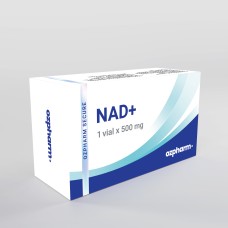
- $48.00
- Price in reward points: 480
Tags: NAD+ 500mg by Ozpharm, Ozph032, Supplements
NAD+ 500 mg by Ozpharm – Cellular Energy & Anti-Aging Research Compound
Introduction
NAD+ 500 mg by Ozpharm is a research compound containing nicotinamide adenine dinucleotide (NAD+), an essential cellular coenzyme involved in energy metabolism, redox reactions, mitochondrial function, DNA repair, and cellular signaling.
NAD+ has become an important subject in cellular biology, aging, metabolic, mitochondrial, neurological, and oxidative-stress research. Scientific studies continue to investigate how NAD+ availability changes with age and how NAD+-related pathways may influence cellular function and physiological processes.
Product Details
Product Name: NAD+ 500 mg
Manufacturer: Ozpharm
Active Compound: Nicotinamide Adenine Dinucleotide (NAD+)
Compound Category: Cellular Energy & Metabolic Research Compound
Strength: 500 mg
Primary Research Areas: NAD+ metabolism, mitochondrial function, cellular energy, oxidative stress, aging biology, metabolic signaling
Intended Use: Research purposes only
NAD+ is naturally present in cells and participates in numerous biochemical reactions. The NAD+/NADH redox pair is particularly important for maintaining cellular energy metabolism and redox homeostasis.
Research Benefits and Properties
NAD+ 500 mg is being investigated across several areas of cellular and metabolic research, including:
Cellular Energy Research: NAD+ participates in metabolic reactions involved in cellular energy production.
Mitochondrial Research: NAD+ availability is closely associated with mitochondrial metabolism and oxidative phosphorylation.
Redox Balance: NAD+/NADH cycling plays an important role in cellular oxidation-reduction processes.
DNA Repair Research: NAD+ serves as a substrate for enzymes involved in DNA-repair and cellular stress responses.
Cellular Aging Research: Researchers are studying NAD+ metabolism in relation to cellular aging and longevity biology.
Metabolic Research: NAD+ participates in glucose, lipid, and energy metabolism.
Oxidative-Stress Research: NAD+-dependent pathways contribute to cellular responses to oxidative stress.
Cellular Signaling: NAD+ is involved in signaling pathways through enzymes such as sirtuins, PARPs, and CD38.
Neurobiological Research: NAD+ metabolism is being investigated in neurological and neurodegenerative research.
Inflammation Research: NAD+-dependent pathways may influence inflammatory and cellular stress signaling.
NAD+ therefore represents an important research target because changes in NAD+ metabolism can influence multiple interconnected cellular systems.
How Does NAD+ Work?
NAD+ exists as part of the NAD+/NADH redox system. NAD+ can accept electrons and become NADH, while NADH can subsequently donate electrons during metabolic reactions.
This reversible process allows NAD+ to participate in pathways such as glycolysis, the citric acid cycle, fatty-acid metabolism, and oxidative phosphorylation. Mitochondrial NAD+/NADH balance is particularly important for cellular energy production.
Beyond energy metabolism, NAD+ also functions as a substrate or cofactor for enzymes involved in cellular signaling. These include sirtuins, poly(ADP-ribose) polymerases (PARPs), and CD38, which connect NAD+ metabolism with processes such as DNA repair, stress responses, inflammation, and cellular regulation.
NAD+ should also be distinguished from NAD+ precursors such as nicotinamide riboside (NR) and nicotinamide mononucleotide (NMN). These compounds are involved in NAD+ biosynthesis but are not identical to NAD+ itself.
Potential Research Applications
NAD+ 500 mg may be investigated in laboratory and scientific research involving:
Cellular energy metabolism
Mitochondrial function
NAD+/NADH redox biology
Oxidative stress
Cellular aging
Longevity biology
DNA repair mechanisms
Metabolic signaling
Glucose metabolism
Lipid metabolism
Neurobiology
Neurodegenerative research
Inflammatory signaling
Cellular stress responses
Sirtuin-related research
PARP-related research
CD38-related research
Mitochondrial aging
Cellular senescence
Tissue and cellular protection research
Research into NAD+ metabolism has expanded because NAD+ connects energy production with cellular signaling, stress responses, and maintenance mechanisms. However, the clinical significance of manipulating NAD+ levels in humans remains an active area of investigation.
NAD+ Combinations
In research settings, NAD+ may be investigated alongside compounds and pathways associated with cellular metabolism and mitochondrial function.
Potential research combinations include:
NAD+ + NMN: Research into NAD+ biosynthesis and precursor metabolism.
NAD+ + Nicotinamide Riboside (NR): Investigation of NAD+-boosting pathways.
NAD+ + CoQ10: Mitochondrial energy and oxidative-stress research.
NAD+ + Alpha-Lipoic Acid: Investigation of redox and mitochondrial pathways.
NAD+ + Resveratrol: Research involving NAD+-dependent signaling and sirtuin-related pathways.
NAD+ + Antioxidant Compounds: Investigation of oxidative stress and cellular protection.
NAD+ + Mitochondrial Research Compounds: Studies of mitochondrial bioenergetics.
NAD+ + Metabolic Research Compounds: Research involving glucose, lipid, and energy metabolism.
These combinations represent research concepts only, not recommendations for human administration. Different compounds can have different pharmacological properties, absorption characteristics, metabolic pathways, and safety profiles.
NAD+ Cycle and Research Protocol
There is no universally established or approved consumer-use cycle for NAD+ 500 mg by Ozpharm.
Research protocols involving NAD+ can vary according to the research objective, formulation, concentration, route of administration, study duration, experimental model, and laboratory methodology.
Research involving NAD+ should not be converted into a personal dosing cycle for a commercial NAD+ 500 mg product. Studies involving NAD+ precursors or other NAD+-related interventions also cannot automatically be used as dosing guidance for direct NAD+ preparations.
Current research continues to investigate the most appropriate methods for modifying NAD+ metabolism and determining whether changes in NAD+ availability translate into meaningful long-term health outcomes.
Possible Side Effects
The safety profile of NAD+ research preparations can depend on the specific formulation, purity, concentration, route of administration, and experimental conditions.
Potentially relevant effects may include:
Headache
Nausea
Gastrointestinal discomfort
Fatigue
Dizziness
Flushing or temporary discomfort
Changes in alertness or subjective energy
Local irritation or injection-site reactions where applicable
Hypersensitivity or allergic reactions
Temporary metabolic changes
Unknown effects associated with prolonged or repeated exposure
Because different NAD+-related preparations and administration methods have different pharmacological characteristics, safety findings from one formulation or research protocol should not automatically be applied to another.
Long-term safety and the clinical significance of NAD+ manipulation remain areas requiring further investigation.
Important Safety Considerations
NAD+ is a naturally occurring cellular molecule, but its natural presence does not mean that every concentrated commercial NAD+ preparation is automatically suitable for human administration.
Research involving NAD+ 500 mg should consider:
Compound identity and characterization
Purity and concentration
Certificate of Analysis (CoA)
Formulation and stability
Sterility where applicable
Endotoxin testing where applicable
Aggregation and degradation
Administration route
Experimental duration
Individual biological variability
NAD+ research should also be clearly distinguished from research involving NAD+ precursors such as NR and NMN. These compounds participate in NAD+ biosynthesis but are chemically and pharmacologically distinct from NAD+ itself.
Storage
NAD+ 500 mg should be stored according to the manufacturer's documented storage requirements.
Research laboratories should protect the material from unsuitable temperatures, moisture, excessive light, contamination, and repeated environmental exposure.
Product-specific storage instructions should always take precedence over generalized storage recommendations.
NAD+ and Cellular Aging Research
NAD+ has become an important target in aging research because it is connected with mitochondrial activity, cellular energy production, redox balance, DNA repair, cellular stress responses, and signaling pathways.
Research has observed age-related changes in NAD+ availability in multiple tissues and organisms, generating interest in strategies designed to maintain or restore NAD+ metabolism. Preclinical studies have reported potentially beneficial effects from NAD+-boosting approaches, but translating these findings into established human anti-aging applications remains challenging.
Researchers are therefore investigating NAD+ metabolism in relation to:
Cellular aging
Mitochondrial decline
Oxidative stress
DNA damage
Cellular senescence
Metabolic dysfunction
Neurodegeneration
Inflammation
Tissue homeostasis
Longevity biology
The relationship between NAD+ levels and healthy aging remains an active area of scientific investigation.
Why Is NAD+ 500 mg Being Researched?
NAD+ is being researched because it sits at the intersection of several fundamental biological systems.
Research interest includes:
Cellular energy production
Mitochondrial function
Aging biology
Oxidative stress
DNA repair
Cellular signaling
Metabolic health
Neurobiology
Inflammatory pathways
Redox balance
Sirtuin activity
PARP activity
CD38 signaling
Cellular stress responses
Cellular senescence
Mitochondrial homeostasis
NAD+ is particularly interesting because changes in its availability can potentially influence several biological pathways simultaneously. However, current evidence does not establish that increasing NAD+ through a particular commercial product produces broad anti-aging, longevity, or wellness benefits in humans.
Conclusion
NAD+ 500 mg by Ozpharm is a research compound centered on nicotinamide adenine dinucleotide, an essential cellular molecule involved in energy metabolism, redox reactions, mitochondrial biology, DNA repair, and cellular signaling.
Its broad biological importance has made NAD+ an active research subject spanning cellular energy, mitochondrial function, oxidative stress, metabolism, neurobiology, cellular aging, and longevity research.
Related Products
NAD+ 500mg by Ozpharm
$48.00