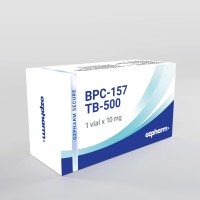
tb-500-5mg-bpc-157-5mg-1-vial-10mg-by-ozpharm

- Brand: Ozpharm
- Product Code: Ozph046
- Reward Points: 55
- Availability: In Stock
- Warehouse US Domestic 2
- $55.00
- Price in reward points: 550
Tags: TB 500 5mg / BPC 157 5mg (1 vial 10mg) by Ozpharm, Ozph046, Anti-aging, Wound Healing
TB-500 5 mg / BPC-157 5 mg – Ozpharm | 10 mg Research Peptide Blend
Introduction
TB-500 5 mg / BPC-157 5 mg, manufactured by Ozpharm, is a two-peptide research formulation containing 5 mg of TB-500 and 5 mg of BPC-157, providing a total labeled content of 10 mg in one vial.
BPC-157 and TB-500 are experimental peptides that have attracted research interest primarily because of their potential roles in tissue-repair, cellular signaling, angiogenesis and recovery-related pathways. However, the evidence supporting these effects is predominantly preclinical.
Product Details
Product Name: TB-500 5 mg / BPC-157 5 mg
Manufacturer: Ozpharm
Active Compounds: TB-500 + BPC-157
TB-500 Content: 5 mg
BPC-157 Content: 5 mg
Total Vial Content: 10 mg
Product Type: Experimental peptide blend
Research Areas: Tissue repair, cellular signaling and regenerative biology
Human Therapeutic Status: Not an approved human medicine
Intended Classification: Research use only
Benefits and Research Properties
The following represent areas of scientific investigation and proposed biological properties, rather than proven medical benefits.
BPC-157 Research
BPC-157 has been investigated in preclinical models involving:
Tissue-repair mechanisms
Gastrointestinal biology
Tendon and ligament research
Wound-healing pathways
Angiogenesis
Cellular signaling
Inflammatory-response pathways
Vascular biology
Human evidence remains extremely limited, and there is no established human dosing regimen or long-term safety profile.
TB-500 Research
TB-500 is a fragment associated with thymosin-beta-4 research. Experimental studies have investigated thymosin-beta-4-related pathways involving:
Cellular migration
Tissue remodeling
Wound-healing mechanisms
Angiogenesis
Actin-related cellular processes
Tissue-repair signaling
Importantly, evidence involving full-length thymosin beta-4 should not automatically be interpreted as evidence for TB-500 itself. FDA materials state that it has not identified human exposure data for TB-500 drug products and that its potential human safety risks remain uncertain.
Combined Research Interest
The combination of BPC-157 and TB-500 is marketed in some research and fitness communities because the two compounds are associated with overlapping areas of tissue-repair research.
However, a synergistic effect of the exact BPC-157/TB-500 combination has not been established in controlled human clinical trials.
How the Combination Is Studied
BPC-157 and TB-500 represent different experimental peptides with different biological targets and research histories.
BPC-157
Research has examined BPC-157 in relation to vascular signaling, tissue repair and inflammatory pathways.
TB-500
TB-500 is investigated as a thymosin-beta-4 fragment, with research interest surrounding cellular migration, tissue remodeling and repair-related mechanisms.
Potential Complementary Research
Because both compounds have been associated with tissue-repair research, investigators may be interested in studying them together. However, there is currently insufficient evidence to establish that combining them produces superior outcomes compared with studying either compound independently.
Common Research Combinations
There is no medically established human "stack" for BPC-157 and TB-500.
Research involving these compounds may examine them alongside:
Cellular repair models
Tissue-injury models
Inflammatory models
Vascular biology studies
Wound-healing research
Exercise-recovery models
Combining experimental peptides with prescription medicines, anabolic agents or other research compounds should not be presented as a proven or safe human protocol.
Cycle and Research Protocol
There is no validated human cycle for TB-500 5 mg / BPC-157 5 mg.
The presence of 5 mg of each compound in one vial does not constitute a recommended human dose or treatment cycle. Published experimental work cannot be reliably converted into a self-administration protocol because important information about human pharmacokinetics, optimal exposure, long-term safety and interactions remains unavailable.
FDA materials state that no clinical studies or human exposure data were identified for TB-500 and that safety information for BPC-157 is limited.
Therefore, this product should be described as an experimental research blend, rather than marketed with a specific injection cycle or personal-use dosing schedule.
Possible Side Effects and Safety Concerns
Because these peptides lack adequate human clinical research, their complete safety profiles remain unknown.
BPC-157 Safety Concerns
FDA documentation identifies potential concerns involving:
Immunogenicity
Peptide-related impurities
Active pharmaceutical ingredient characterization
Limited human safety information
FDA's adverse-event review also identified reports involving injectable BPC-157, including injection-site redness and swelling and a report of shortness of breath. One report involved a product containing both BPC-157 and TB-500, with hyperpigmentation and gingival darkening reported after use; because two peptides were present, the individual contribution of either compound could not be determined.
TB-500 Safety Concerns
For TB-500, FDA materials state that there are no identified human exposure data for drug products containing the peptide fragment and therefore potential human safety risks remain unknown. Concerns include:
Immunogenicity
Peptide aggregation
Peptide-related impurities
Unknown long-term effects
Unknown human pharmacokinetics
Unknown drug interactions
General Risks of Research Peptides
Additional concerns can arise from the quality of unapproved injectable products, including:
Incorrect concentration
Contamination
Sterility problems
Mislabeling
Impurities
Unexpected immune reactions
These risks are particularly important for injectable research products.
TB-500 and BPC-157 for Recovery Research
BPC-157 and TB-500 have attracted considerable attention in sports and fitness communities because of claims surrounding muscle, tendon, ligament and soft-tissue recovery.
However, current clinical evidence does not establish these peptides as proven treatments for sports injuries or enhanced recovery. A 2026 review found extremely limited clinical evidence for BPC-157 and no peer-reviewed human data supporting TB-500 for musculoskeletal healing.
Therefore, claims such as "rapid injury healing," "faster muscle recovery" or "guaranteed tendon repair" should not be presented as established medical benefits.
Who Uses TB-500 / BPC-157 in Research?
Research-grade BPC-157 and TB-500 may be of interest to:
Biomedical research laboratories
Peptide pharmacology researchers
Tissue-repair researchers
Regenerative biology laboratories
Cellular signaling researchers
Wound-healing research programs
Vascular biology researchers
Pharmaceutical research organizations
Academic research institutions
Research materials should be handled according to appropriate laboratory safety procedures and applicable regulations.
Storage Instructions
Storage requirements depend on the specific formulation and manufacturer's documentation.
For research-grade peptide products:
Follow the manufacturer's specified storage conditions.
Protect the product from excessive heat and moisture.
Protect from light when instructed.
Avoid conditions that could compromise peptide stability.
Do not use material if the packaging or product integrity is compromised.
Follow appropriate laboratory handling and safety procedures.
Important Research Disclaimer
TB-500 5 mg / BPC-157 5 mg is an experimental peptide combination and should not be presented as an approved treatment for injuries, tendon damage, ligament injuries, muscle recovery, inflammation, gastrointestinal disorders or any other medical condition.
There is currently insufficient clinical evidence to establish the safety, efficacy, optimal dose or long-term effects of the exact 5 mg / 5 mg combination. FDA materials specifically identify limited safety information for BPC-157 and insufficient human safety information for TB-500.
Conclusion
TB-500 5 mg / BPC-157 5 mg by Ozpharm is a two-component experimental peptide blend containing 5 mg of TB-500 and 5 mg of BPC-157, for a total labeled vial content of 10 mg.
Both compounds have attracted scientific interest in areas involving tissue repair, cellular signaling, vascular biology, wound-healing mechanisms and regenerative research. Nevertheless, the majority of evidence remains preclinical, and the clinical evidence for human use is insufficient.